

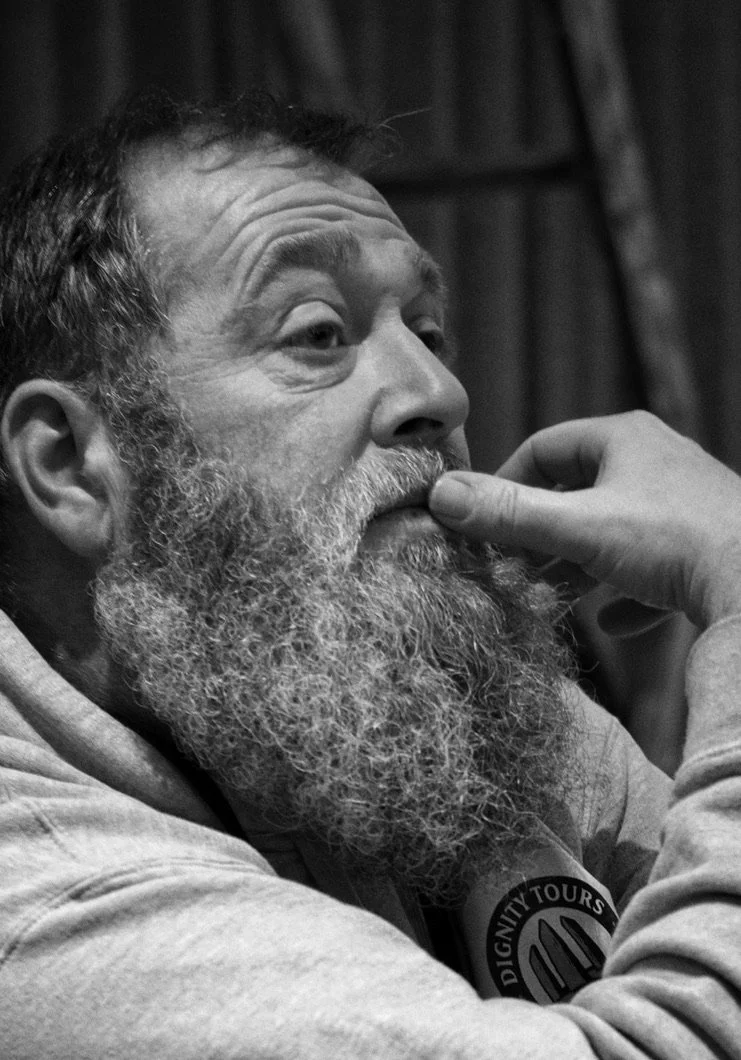
Hello, I’m Michael Moore, and welcome to Dignity Tours.
These days, I drive people around Scotland for a living, which is a far better office than anything with fluorescent lighting and a passive-aggressive kettle rota. I get castles, glens, lochs, dramatic skies, and weather that can cycle through all four seasons before you’ve finished your coffee.
Before all this, I was a barber in Edinburgh. I left school, got a job in a barbershop, and stayed there for 18 years. Which is a long time to spend listening to people say, “Just a wee trim,” when what they actually mean is, “I’d like you to somehow make me look younger, fitter, and less tired, but without taking too much off.”
To be fair, barbering gave me a lot: good banter, great stories, and a front-row seat to human nature in all its strange little glory. You learn a lot about people when they’re staring at themselves in a mirror under bright lighting. Some stories I still tell. Others are best left in the shop, where they belong, under a thick layer of hairspray and silence. But after a while, I started getting restless. I kept hearing customers talking about holidays, adventures, sunny escapes, and I thought, “Aye, that sounds nice. I’d quite like a bit of that myself, instead of hearing about Benidorm from under a strip light.”
When the shop was quiet, I read to pass the time. I loved history, but some history books are so dry they make oatcakes seem reckless. So I started reading children’s history books instead. They explained things clearly, got to the point, and often had pictures—which, let’s be honest, remains one of literature’s strongest features.
Travel books weren’t usually my thing. I always thought, “Why sit reading about somebody else getting gloriously lost in a far-off country when you could be trying to get gloriously lost yourself?” But three books changed my mind—and, annoyingly enough, may have ended up changing my life as well.
1. The Long Way Round –
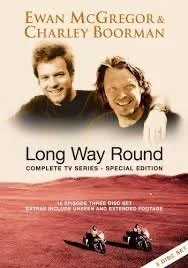
Ewan McGregor and Charley Boorman
This was the first travel book I ever read, and it follows two actors who decide to get from London to New York by going east on motorcycles. Which sounds sensible until you remember maps exist. They head through Europe, across Siberia, then over to Alaska and Canada before finally reaching New York. What I loved was that they weren’t pretending to be fearless action heroes; half the time they seemed like two pals wondering what on earth they’d signed up for. There’s homesickness, mechanical disasters, kind strangers, and that brilliant feeling of arriving somewhere unfamiliar and realising the world is full of people willing to help a pair of confused travellers.
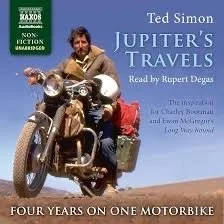
2. Jupiter’s Travels – Ted Simon
In Mongolia, Ewan and Charley meet Ted Simon, a man who had already ridden around the world on a motorbike—and not in a “nice weekend away” sort of way. Jupiter’s Travels tells the story of his four-year journey through 45 countries on a Triumph Tiger. It’s huge in scale, full of character, and made even more fascinating by the fact he did it in the 1970s, when long-distance travel was a very different beast altogether.
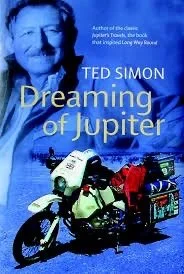
3. Dreaming of Jupiter – Ted Simon
Then Ted Simon did something even more impressive: at 70, he went back out and retraced the route. That became Dreaming of Jupiter. Same road in theory, completely different journey in reality. Different world, different encounters, different version of himself. I loved the idea that travel doesn’t just show you places—it shows you time, change, and who you’ve become since the last version of your life.

Those books planted a dangerous idea in my head: maybe driving didn’t have to mean traffic, errands, and arguing with roundabouts before 9 a.m. Maybe it could mean freedom. Maybe it could mean stories. Maybe it could even mean a job I actually looked forward to.
In 2014, after one particularly miserable day at work, I decided something had to change. Travel felt like the answer. The only problem was I had absolutely no money, which is not ideal when planning a glamorous new chapter. Still, I made one phone call that ended up changing everything.
So, I phoned a company that helped people get their bus licence. My plan, in theory, was beautifully straightforward: get the licence, start driving tours around the UK, and eventually work my way onto the roads of Europe. In practice, it was the sort of plan that sounds wildly impressive when you say it out loud and slightly unhinged when you sit alone and think about it properly.
Coach drivers deserve enormous respect. Driving a big vehicle through narrow roads, tiny villages, and places clearly designed before anyone had imagined buses is no small task. After about six months of training, I finally passed. I was delighted. The world, however, remained cautious.
As a brand-new driver with no experience, I quickly discovered that nobody was exactly fighting to hand me the keys. I contacted company after company and got the same reply: “You’re too new.” Which is a frustrating system, because unless people are emerging from the womb able to parallel-park a minibus in the Highlands, everyone has to start somewhere.
Then one December, I got a call from Highland Experience asking me to come in for an interview. Me? I was as surprised as anyone. But the interview went well, I got the job, and for the next few months I learned routes, listened carefully to experienced guides, and tried not to look too obviously terrified.
My first proper tour was the long one: Edinburgh to Loch Ness and back. More than 500 kilometres in a day, with real passengers trusting me to get them there, keep them entertained, and ideally avoid becoming a local cautionary tale. It was intense, exhausting, slightly terrifying, and completely brilliant. I learned a lot that day—and I’m fairly sure I also developed a new line on my forehead.
That first year was packed with day tours to places like St Andrews, Loch Lomond, Stirling Castle, and Rosslyn Chapel. I’d seen some of these places before, of course, but learning the history behind them changed everything. Scotland is stunning on its own, but once you know the stories, the battles, the myths, the characters and chaos that shaped it—it gets even better.
In the second year came the multi-day tours: Inverness, Loch Ness, Skye, and more of the country opening up mile by mile. For plenty of people, that would have been enough. For me, it only made the appetite worse. The more of Scotland I saw, the more I wanted to keep going.
So, at the end of my second year, I moved to Rabbie’s Tours in Edinburgh. They had a huge range of tours, which suited me perfectly. In the interview, I told the manager I wanted to see every part of Scotland, and I believed Rabbie’s could help me do that. I never quite managed every single corner, but after nine years there, I gave it a very serious attempt.
By my seventh year as a guide, I started feeling I’d hit a plateau. When you tell stories for a living, there comes a moment where you wonder, “Did I already tell this group about Mary Queen of Scots, or have I now entered some kind of historical Groundhog Day” I wanted to sharpen my knowledge properly, so I joined the Scottish Tour Guiding Association and committed to 18 months of study. In 2025, I passed my final exam, which meant I didn’t just have good stories—I had the training to back them up.
Then in 2026, I decided it was time to do what people politely call “starting your own business” and what your stomach might describe as “an absolutely unnecessary amount of adrenaline.” I bought a car, built a website, and started freelancing under my own name.
And that brings me to the name: Dignity Tours.
I remember one day during my licence training, sitting there while the radio was on, half listening and half daydreaming, when a song came on that suddenly landed differently. It was Dignity by Deacon Blue.
The song tells the story of a street cleaner who spends years doing a job people overlook, all while quietly holding on to a bigger dream. He saves, he endures, and eventually he buys a boat called Dignity and sails off to see the world. There’s something in that story I’ve always loved: the idea that your dream doesn’t have to arrive all at once, and it doesn’t have to look glamorous from the outside to mean everything to you.
I related to that more than I’d care to admit. He was a street cleaner; I was a barber. He put in twenty years; I put in eighteen. He bought a boat; I couldn’t quite stretch to that, so I got a bus licence instead. Not exactly the same romantic image, I know. One man sails nobly into the horizon; the other learns how not to clip a wing mirror in Perthshire. But still—it was my version of setting off.
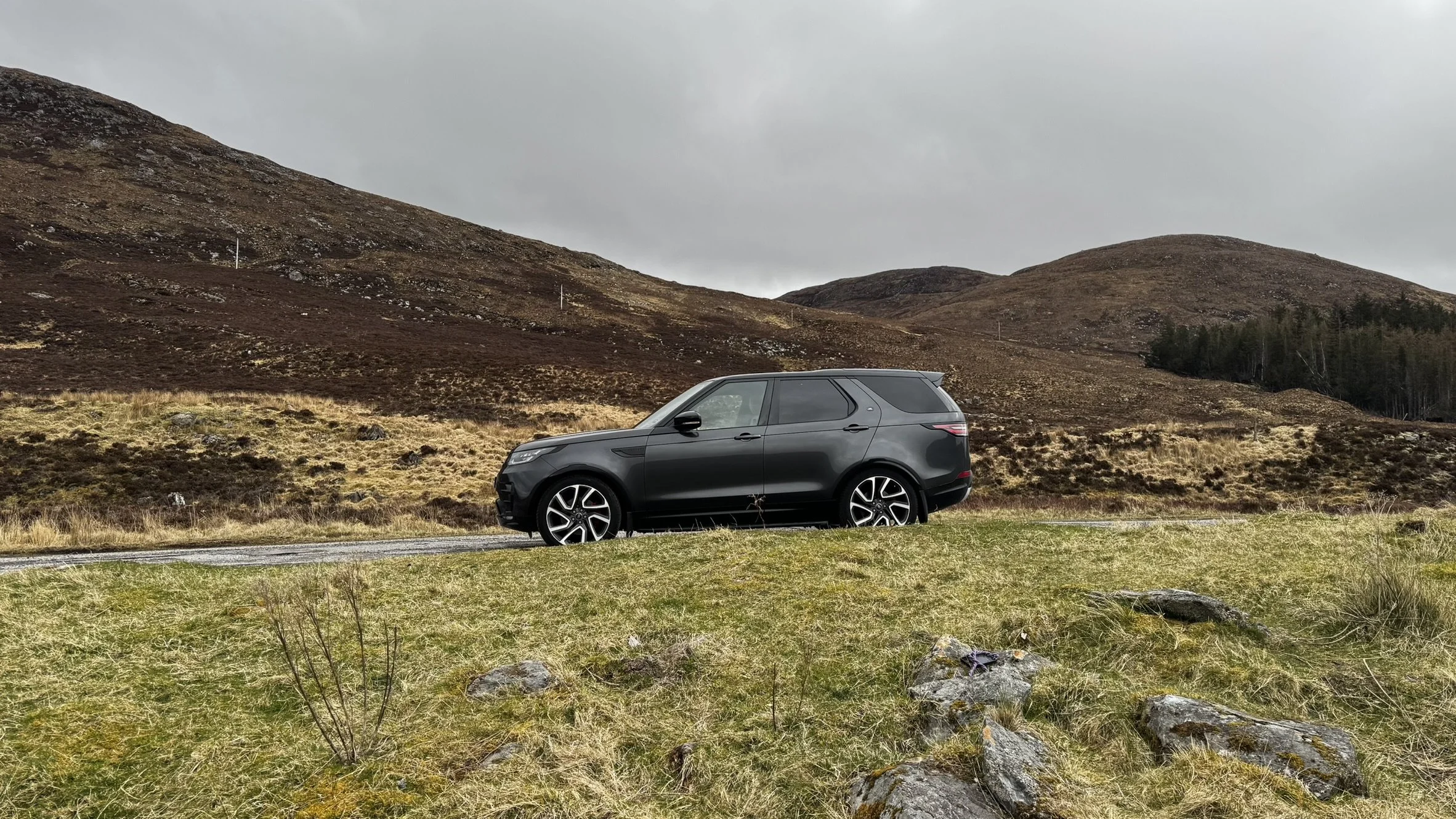
These days, I’ve got a Land Rover Discovery with a 3-litre V6 engine, plenty of comfort, elevated views, and enough room for people to settle in properly and enjoy the journey. But the vehicle isn’t really the point. The point is what it allows me to do: show people a country I love, share the stories that bring it to life, and hopefully give them a day that feels less like a tour and more like an experience they’ll still be talking about afterwards.